Key takeaways
- Your brand is what people feel and remember about your business — the logo is just one part of it.
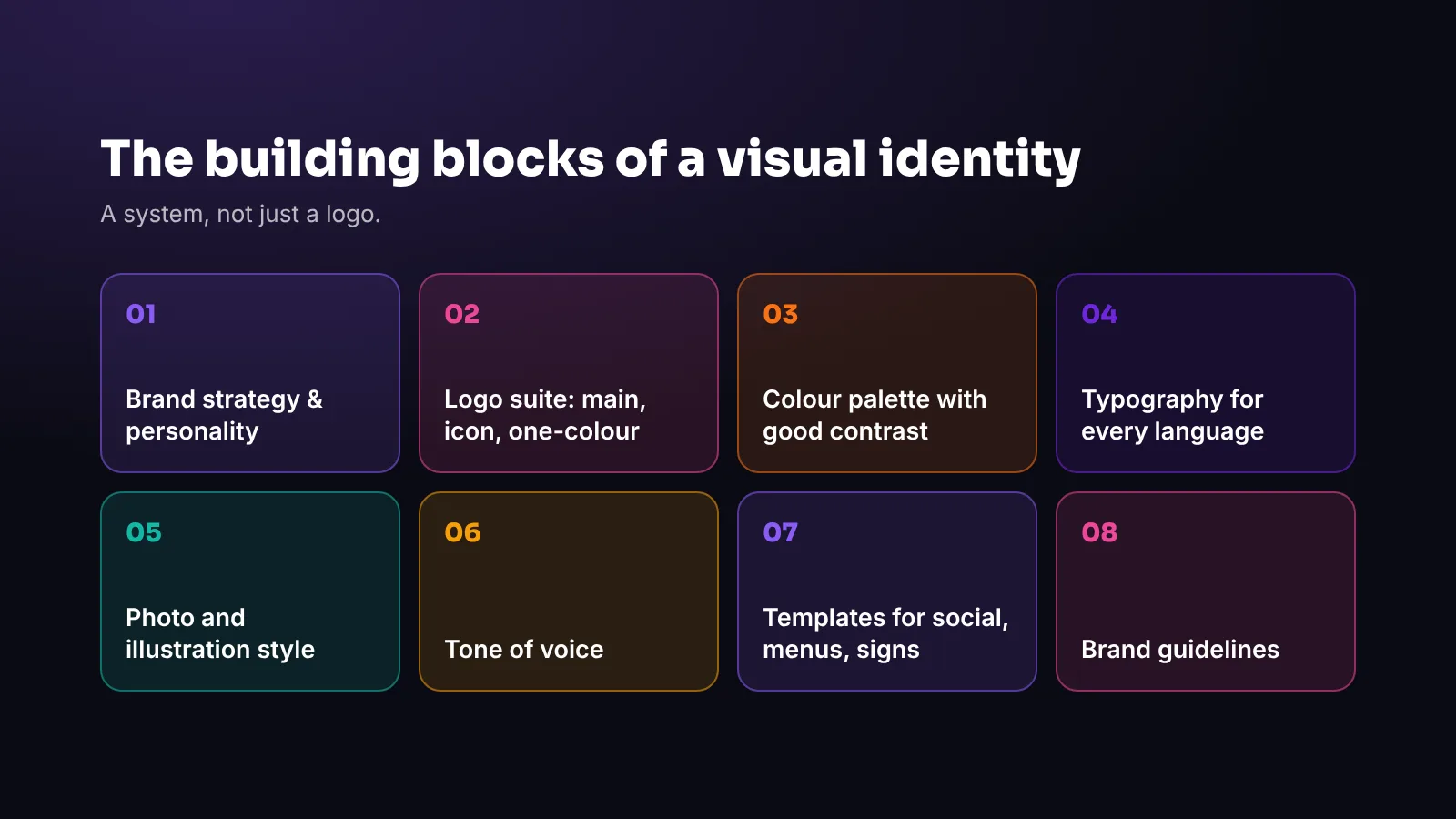
- A complete identity covers logo, colours, typography, imagery, tone of voice and how they’re used.
- Start with strategy: who you serve, what makes you different and the personality you want to project.
- Consistency builds recognition: the same look and voice on your shopfront, website, social media and packaging.
- Refresh when your brand no longer fits your business or customers; full rebrands need a clear reason.
Think of the café you always recommend, or the shop whose bag you recognise across the street. That instant recognition — and the feeling that comes with it — is branding. For small businesses it’s a real advantage: a strong brand looks established, earns trust faster and lets you charge what you’re worth. Here’s how to build one.
What a brand is (and isn’t)
A brand is the sum of everything people experience with your business: how it looks, how it sounds, how it treats them and what others say about it. The visual identity — logo, colours, type — is the part you design. It works best when it expresses something true about the business.
Start with strategy
Before any design, answer these questions in plain words:
- Who are your best customers? Age, area, what they value, why they choose you.
- What do you do better or differently? Ingredients, expertise, speed, atmosphere, values.
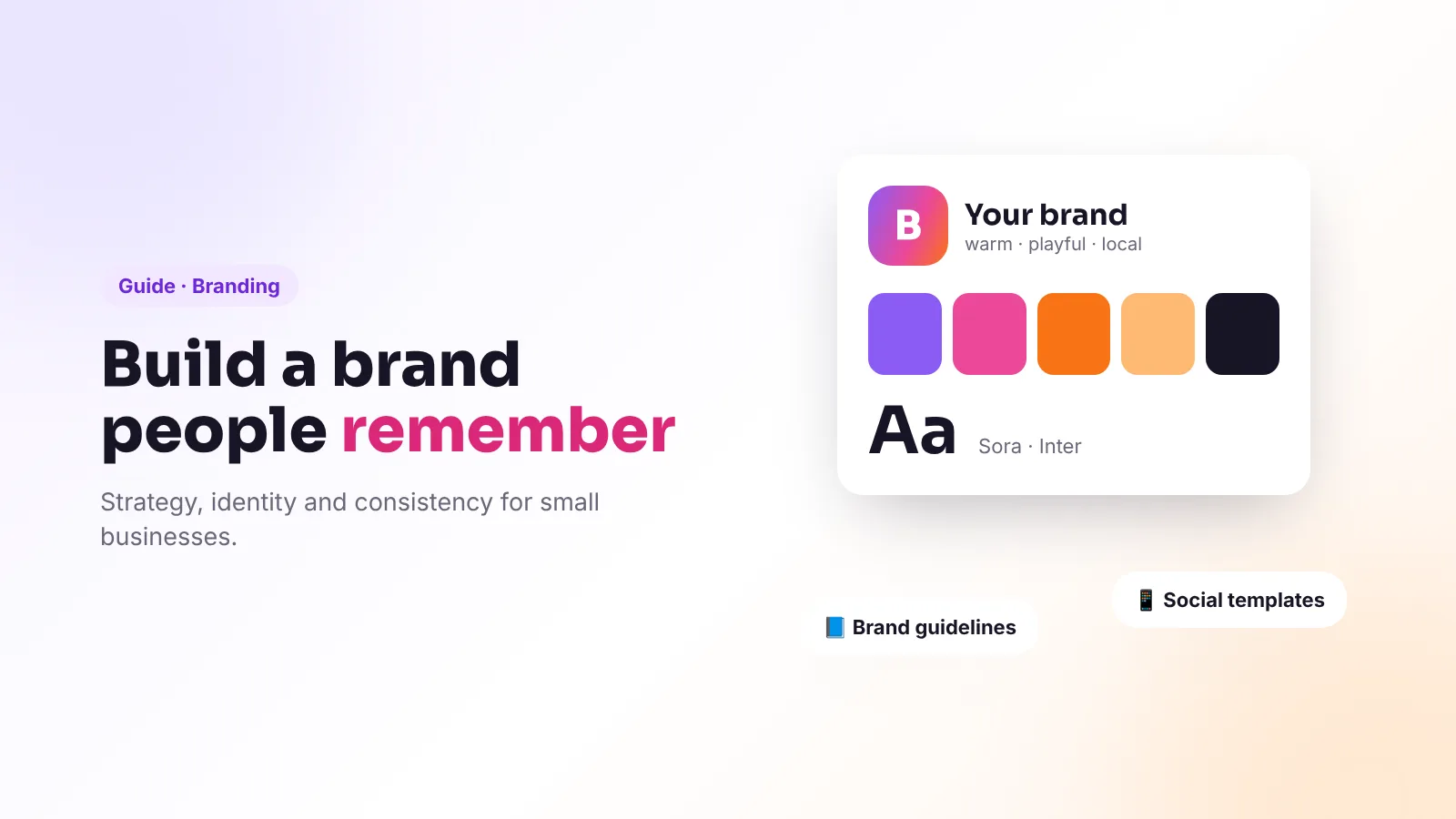
- What three words describe your personality? For example: *warm, playful, local* or *calm, expert, premium*.
- Who are your competitors, and how do they look? You want to stand apart, not blend in.
- What should people feel when they see your brand?
This becomes your brand platform — a one-page summary every design and caption decision can be checked against.
The parts of a visual identity
Logo suite
Not one logo but a set: a main logo, a simpler mark or icon for small spaces (social profile pictures, favicons), and one-colour versions for stamps, embroidery and engraving. A good logo works at the size of a fingernail and the size of a shop sign.
Colour palette
Usually one or two main colours, a few supporting colours and neutrals. Check contrast so text stays readable for everyone — the WCAG accessibility guidelines recommend a contrast ratio of at least 4.5:1 for normal text.
Typography
One or two typefaces: a distinctive one for headings and a highly readable one for body text. Check that they include the characters of every language you use.
Imagery
Rules for photos and graphics: lighting, colours, framing, people or products, illustration style. Real photos of your team, place and work usually beat stock images.
Tone of voice
How you write: formal or casual, playful or calm, short or detailed. Give examples of words you use and words you avoid. Good tone of voice makes captions, emails and menus instantly recognisable.
Templates
Social media post and Story templates, menus, price lists, business cards, email signatures and signage — so everything looks right even when you’re in a hurry.
Brand guidelines
A short guide (often a PDF) that explains how to use your logo, colours, type, imagery and voice, with dos and don’ts. It saves time and keeps staff, printers, sign-makers and agencies consistent.
Consistency everywhere
- Shopfront and signage — the first impression for walk-in customers
- Google Business Profile — logo, cover photo and photos in your style
- Website — colours, type and tone matching everything else
- Social media — templates, photo style and captions in your voice
- Packaging, menus and receipts — small details that customers notice
- Uniforms and staff — part of the experience too
Refresh or rebrand?
- Refresh: keep what people recognise and modernise it — cleaner logo, updated colours, better templates. Right for most established businesses.
- Rebrand: a new name or identity. Worth it when the business has changed significantly, the old brand causes confusion, there’s a legal issue with the name, or you’re moving into a new market.
Either way, plan the roll-out: signage, website, social profiles, Google, printed materials and stock.
Protecting your brand
- Check the name isn’t already used by a similar business in your area or online before you invest.
- Register your domain and social handles early.
- Consider a trade mark for your name and logo — in the UK through the Intellectual Property Office, in the EU through the EU Intellectual Property Office (EUIPO) or national offices.
- Own the files: make sure you receive the original vector files and the rights to use the design.
Frequently asked questions
What is included in a brand identity?
Typically a logo suite, colour palette, typography, imagery style, tone of voice, templates and brand guidelines explaining how to use them.
How much should a small business spend on branding?
It depends on scope: a logo refresh costs much less than full strategy, identity, guidelines and templates. Get a written quote based on what’s included.
How long does a branding project take?
A typical small business identity takes four to eight weeks, including strategy, design concepts, refinements and final files.
Should I refresh my logo or start again?
If customers already recognise your brand, a refresh usually keeps that value while modernising it. A full rebrand makes sense when the business has changed or the old brand causes problems.
Do I need a trade mark?
It isn’t required, but registering your name and logo as a trade mark can protect your brand from copycats. Check availability before you invest in a new name.
The bottom line
A strong brand starts with a clear idea of who you are and who you serve, expressed through a consistent identity everywhere customers meet you. It’s one of the best long-term investments a small business can make.
Viraluna Studio creates complete brand identities — strategy, logo suite, colours, typography, guidelines and templates — and our social media team keeps every post on-brand. Explore branding and design or read about social media for salons.